Fuck cancer.
Take back some control.
I'm Russ. I've had stage 4 bowel cancer since 2021. FC:AI is where I share everything: my data, the AI tools I use, and what's actually helped. It's for patients and carers who want a bit more control, and for anyone who might know something I don't.
Right now: Cycle 5 of FOLFIRI + cetuximab rechallenge · profile updated 21 October 2026
I'm Russ
I was diagnosed with stage 4 bowel cancer in 2021, at 38, with two young kids. It's incurable but treatable, and I'm still in treatment now. I live in Bath and I spent almost twenty years in PR and communications before any of this.
I use AI every day to manage it: tracking every chemo cycle, keeping every scan, letter and blood test in one place, and working out better questions to ask the people treating me. None of that makes me an expert. It makes me a patient who stopped waiting to be handed information.
FC:AI is where I put all of it, in public: my records, the tools, what worked and what didn't. No pink ribbons, no inspirational quotes, no claims I can't back up with a document. It's turned into conversations with researchers, oncologists and patients in half a dozen countries, which is the entire point.
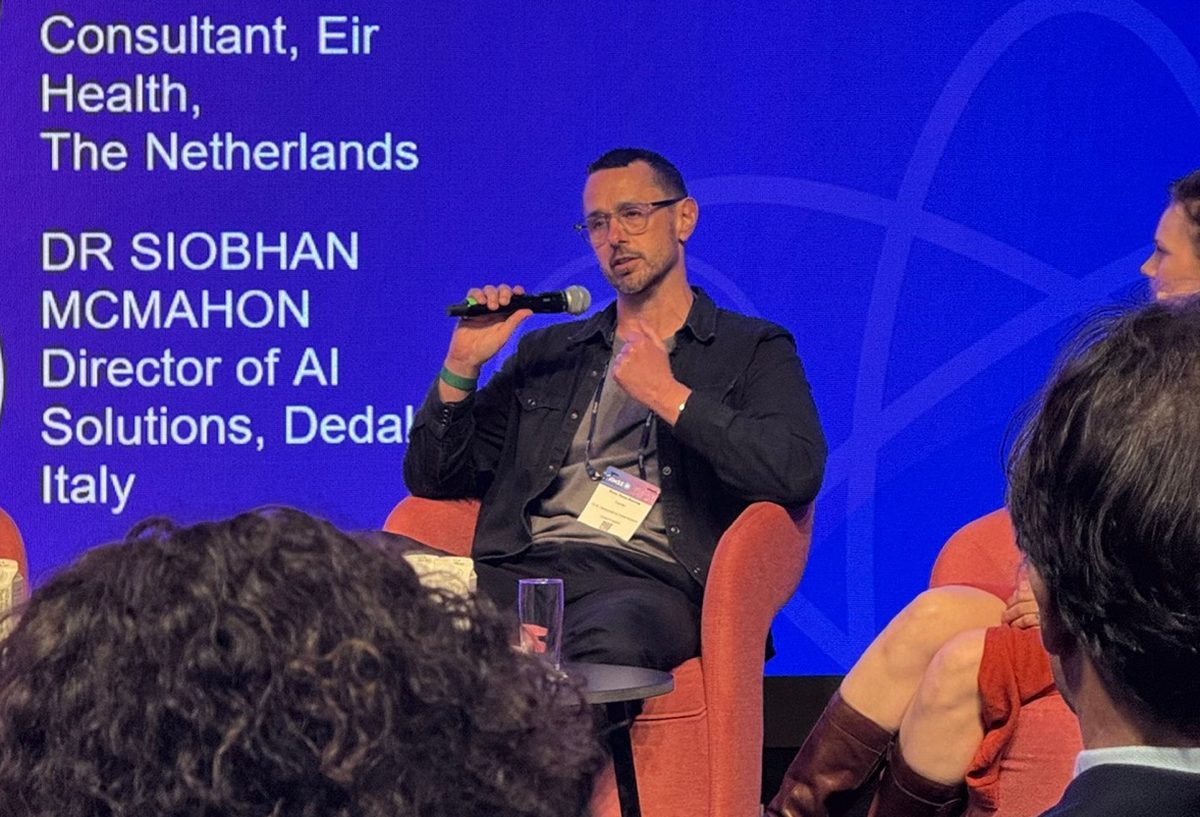
I've talked about it on the main stage at HIMSS Europe, in Health Awareness with the Guardian, in Business Insider and on a few podcasts.
My day job I run Known & Cited, an AI brand intelligence company here in Bath. That one pays for this one. Different project, same person.
What's changed in the last two weeks
Cycles 4 and 5 · 1 – 21 Oct. I rebuild this every two weeks, in time with my chemo cycle — bloods, tracking, the cycle map and anything new that's come out of sharing all this. If you've been here before, this is the bit that's new.
- Open Source Me is now My One View. Same data, same openness, clearer name. The page lives at fcancerwith.ai/my-one-view and the sheet at /my-one-view/card. Every old link redirects.
- CEA is 47.3 µg/L. 146 on 1 September → 47.3 on 12 October; steady at about 45–50 over the last three draws. The hard fall across the restart has levelled off rather than continued, and one reading is not a trend — the CT the week of 2 November is what answers it. ALP has gone 102 (July) → 165 (1 Sep) → 179 (14 Sep) → 169 (29 Sep) → 190 now. Haemoglobin and red cells are still just under range, bilirubin is back inside it at 14, and red cell distribution width is flagged high for the first time. The 29 September platelet count is confirmed at 280, inside range.
Behind it sits the full record: every blood test since April 2025, every scan, the genomics and a daily chemo log. It's all public, because the more people who can see it, the more chance someone spots something.
Three things worth reading
Why I'm open sourcing myself
You already have a huge amount of information about yourself. Pulled together, it's useful to every doctor, nurse and second opinion you ever see. And the more people who see mine, the better my odds.
Read why → So farWhat it's done for me
A genetic specialist in Australia. The vaccine team at Serova. A specialist in Argentina. A genomics researcher who spotted what my testing was missing. None of that happens if the data stays in a drawer.
See what's happened → ToolsThe tools I actually use
Gemini Gems that track chemo from my voice, a NotebookLM vault of every record I have, advisor Gems built from years of notes, and Radical Health.
See the tools →Who I'd love to hear from
People who know this cancer
Patients with a similar profile, oncologists, scientists, geneticists. Is there anything else I should be doing?
Companies building AI for patients
Talk to patients before you go full speed. Advisory, patient-voice input on products, and speaking.
Cancer charities
Working out how to use AI and modernise? I've been using it through treatment every day, and I'd love to be involved.
Patients and carers
Would it help to sit down, on a call or in person, and set some of this up together? Register your interest in a workshop.
Where this has turned up
Health Awareness
"I have stage 4 cancer — AI is how I took back control", in Mediaplanet's supplement with the Guardian.
InterviewBusiness Insider
The three ways I use AI to make treatment a bit easier.
PodcastsFaces of Digital Health · Timewise
The agentic patient, and working through treatment.
StageHIMSS Europe
The patient on the panel, Copenhagen 2026.
Day to day, I'm on LinkedIn
Most of what I write goes on LinkedIn first. If you want to keep up with what I'm doing week to week, follow me there. The blog here is for the posts that need a permanent home.
Why I've changed FC:AI, and what it is now
Less "here's how to build a tool". More "here's everything, go and do something useful with it".
⚕️ FC:AI does not offer medical advice. It's my data and my experience, shared openly. Your medical team handles the medicine.